SPINNING
Liquid becomes fibre
Silk flows as a liquid crystal through a long, narrowing duct that draws out water. An acid bath and pulling stress then turn it into a solid thread.
Compare the silks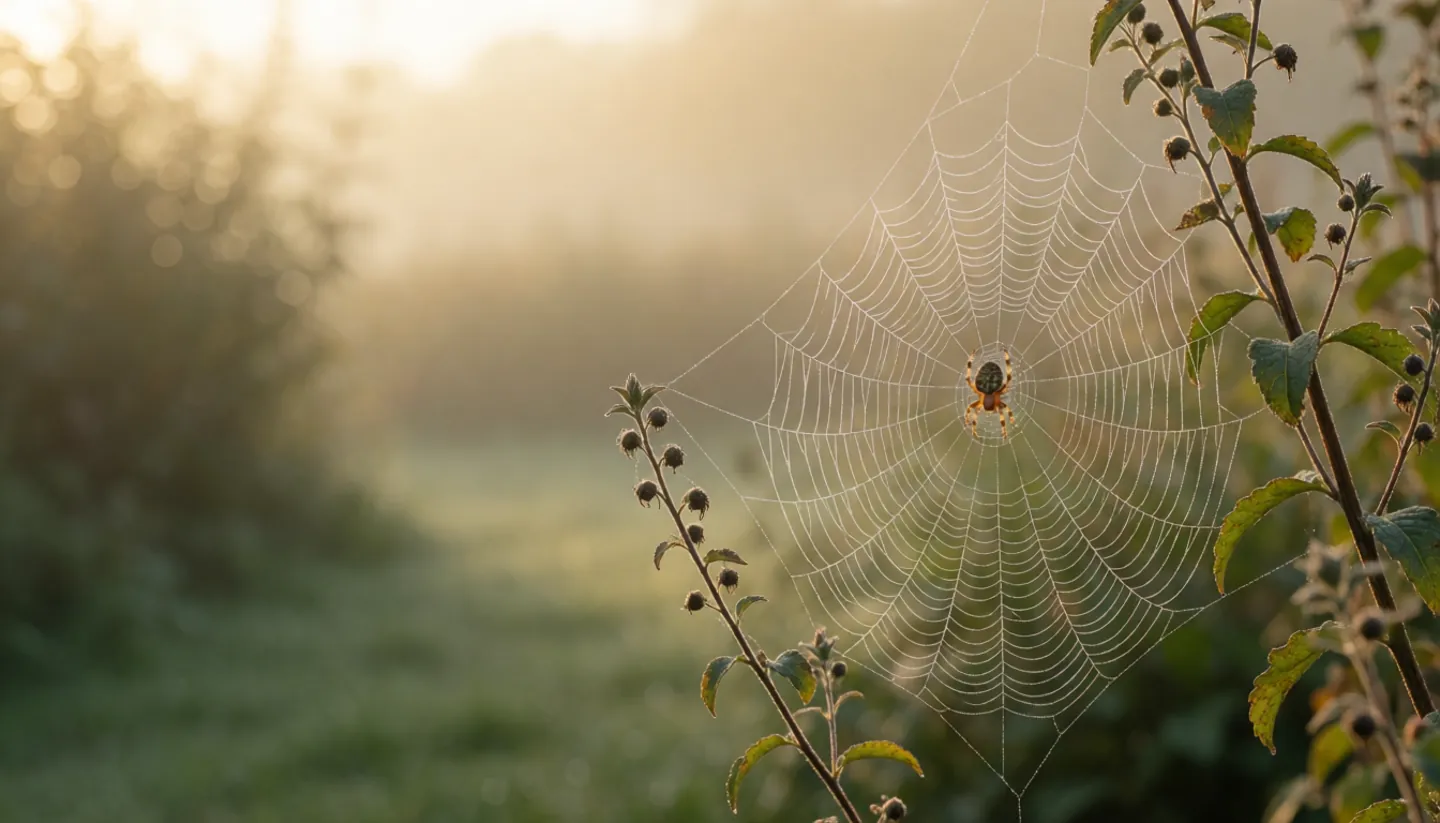
 doodlextruder
HOW NATURE EXTRUDES
0.001 mm a typical silk line
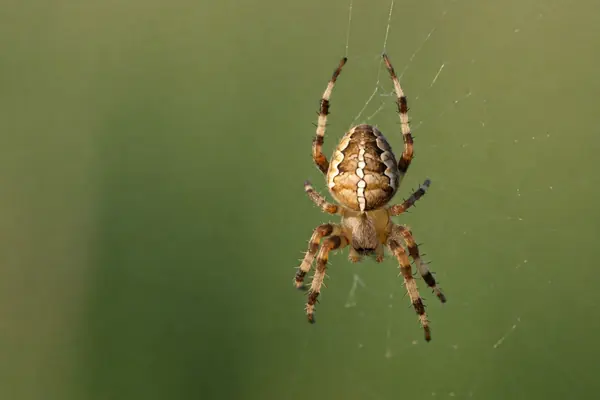
A spider is a tiny, silent extrusion machine.
Silk is made as a thick liquid inside the body, then drawn out through spigots on the spinnerets as a solid fibre. One spider can make several silks, each tuned for a different job.
Updated
Compare the silksTHE SHORT ANSWER
Silk glands make the liquid, the duct turns it into a fibre,
and the spinnerets lay it down where it is needed.
SPINNING
Silk flows as a liquid crystal through a long, narrowing duct that draws out water. An acid bath and pulling stress then turn it into a solid thread.
Compare the silksSILKS
Ten types of silk gland are known in spiders, and up to eight can be found in one species. An orb web mixes strong frame silk with stretchy, sticky spiral silk.
See the numbersLOOK
The UK garden spider builds webs up to 40 cm wide. Look for them on windows and doorways, most likely from April to November.
How to lookTHREE SILKS IN ONE WEB
Pick a part of an orb web to see which silk it is made of. The bar shows how strong that silk is, as the Australian Museum describes it.
Based on the Australian Museum's guide to spider silk.
TWO NUMBERS WORTH KNOWING
One figure on how fine silk is,
one on how far a record-breaking spider can span.
0.001–0.004 mm
A typical spider silk line
A spider's silk line is usually only about 0.001 to 0.004 mm thick. A single fibril of cribellate silk is about 0.00001 mm thick, and thousands combine into one thread.
THICKNESS · AUSTRALIAN MUSEUM
25 m
Anchor threads of Darwin's bark spider
This Madagascan spider hangs giant webs over rivers on anchor threads as long as 25 metres. Its dragline silk was more than twice as tough as any silk described before.
TOUGHNESS · PLOS ONE 2010
A 2001 study in Nature explained that because the spinning liquid is liquid crystalline, spiders can draw it into a hardened fibre during extrusion using minimal force, at close to room temperature and with water as the solvent.
FOUR THINGS TO LOOK FOR
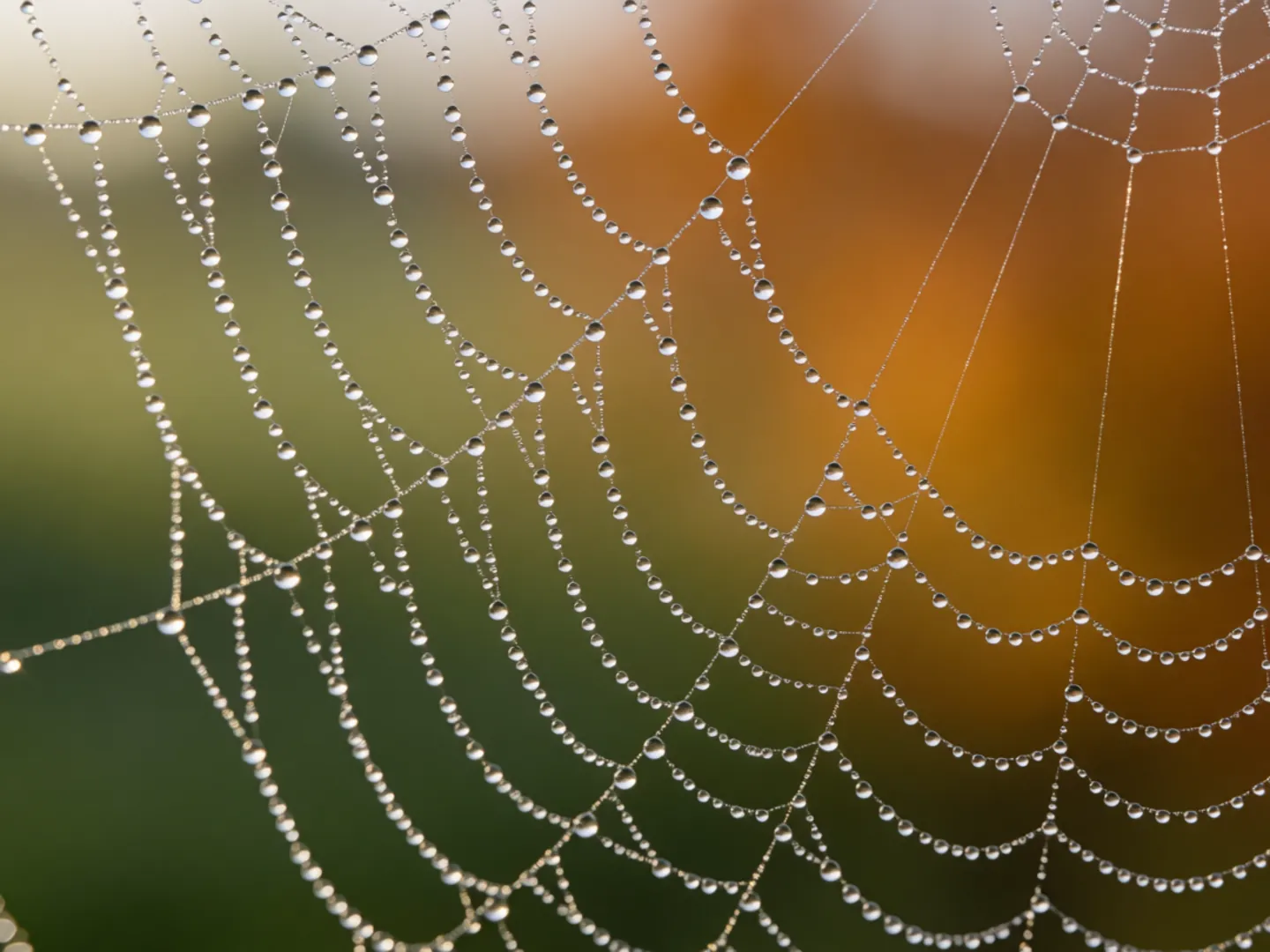
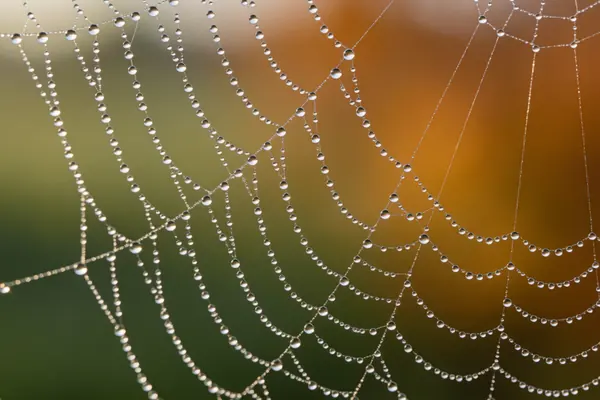
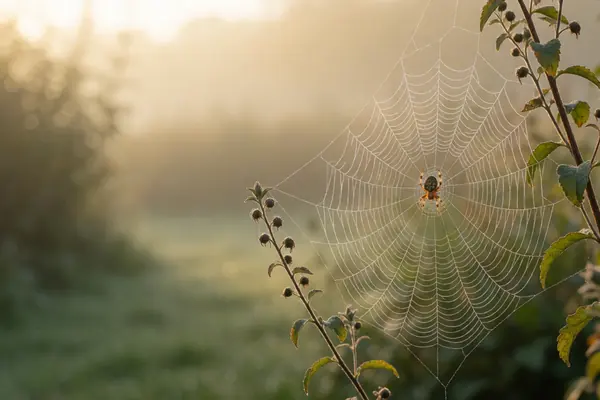
Autumn is when spiders and their webs become most noticeable in the UK, although they are around all year. Dew makes the different threads easy to see.
The straight outer lines and spokes are dragline silk, the strong framework of the web.
The tightly wound spiral is the stretchy catching silk, beaded with tiny sticky droplets.
The centre has no catching silk, so the spider can wait there without sticking.
A web is the spider's way of catching food. Watching from a short distance leaves it working.
BETTER THAN A FACTORY
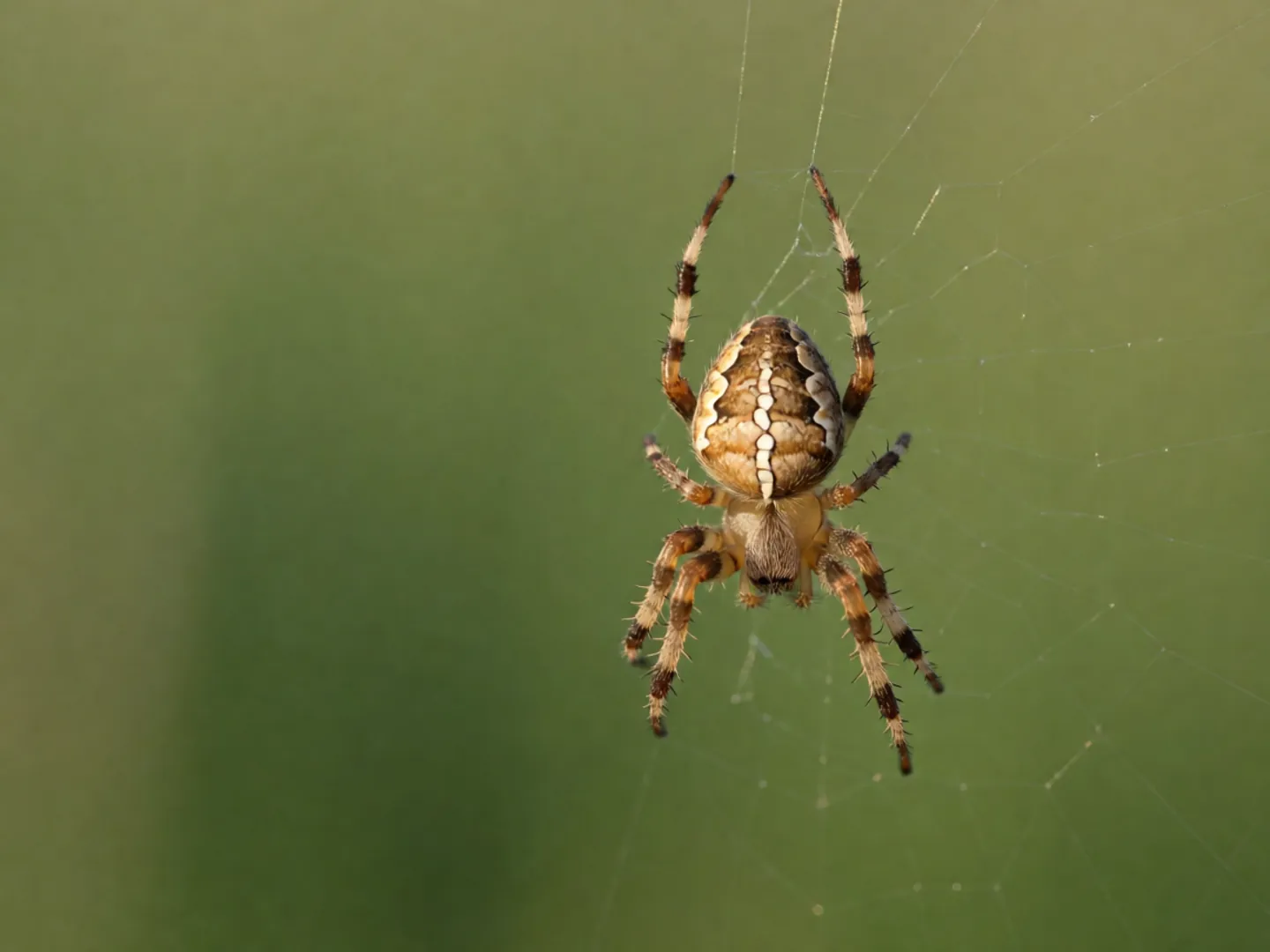
Spider silk is spun at close to ambient temperature and pressure, using water as the solvent. Inside the spinneret the fibre is drawn down internally, a step the 2001 Nature study says is not seen in industrial fibre processing.
The spider controls how its proteins fold and crystallise inside the spinneret. Researchers have suggested that copying this process could one day allow silk-based fibres to be produced industrially under similarly gentle conditions.
Questions
Silk glands in the abdomen produce a liquid protein. It flows through a narrowing duct that removes water, passes through a mild acid bath and is pulled into a solid fibre as it leaves the spigots on the spinnerets.
The Australian Museum says the tensile strength of dragline silk, used for web frames and safety lines, is greater than that of mild steel and almost all artificial fibres.
They touch the web only with their leg tips, clean their legs regularly, and keep the hub and other areas free of sticky catching silk.
Ten types of silk gland are known in spiders, and up to eight can be present in a single species, each making silk with different properties.
The Woodland Trust says you are most likely to see garden spiders from April to November. Their webs can be up to 40 cm wide and are often built on windows and doorways.
Sources
ABOUT THIS NAME
doodlextruder.com is part of the DoodleSale portfolio. It isn't in an auction right now, but you can ask about leasing it.